Fall Carlisle 2026: swap meet, not car show
Opening day at Fall Carlisle: repro sheet metal on the grass, project trucks with price sheets, and rows of parts. A real swap meet is a different animal from a polished car show.
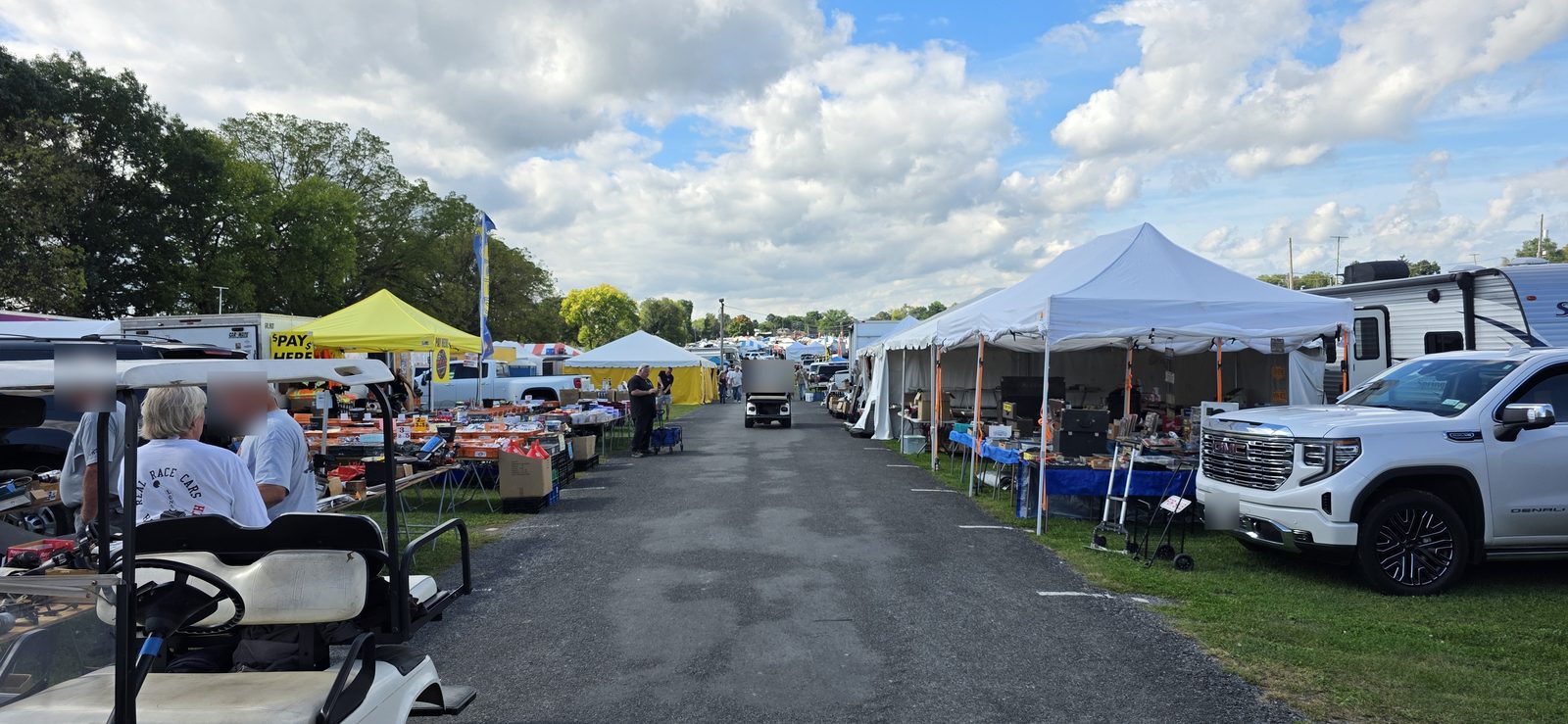
I went to Fall Carlisle on Wednesday, opening day at the Carlisle Fairgrounds in Carlisle, PA. It runs September 30 through October 4 this year. If the only shows you’ve been to are the polished kind, this isn’t that.
A Goodguys-style show is about finished cars. Paint, stance, a folding chair next to a bottle of quick detailer. Fun to walk, and I’m not knocking it. Fall Carlisle is a swap meet first. Carlisle Events lists 8,100 vendor spaces for it, and most of those spaces are people selling out of trucks, trailers, and pop-up tents. Fenders standing in the grass. Project cars with a price sheet taped on. Tables of parts you have to actually dig through.
It’s been going a long time. The first one was billed as “Post War ‘74” and ran September 26, 1974, on fairgrounds the founders were still renting at the time. Carlisle’s own history page puts that first event at nearly 600 vendors in more than 800 spaces.
There aren’t many events like this left, at least not at this size. That’s my read, not a statistic. A lot of what used to happen in a swap meet aisle happens on a phone now. Some of it can’t, and that’s why I still go.
What one row looks like
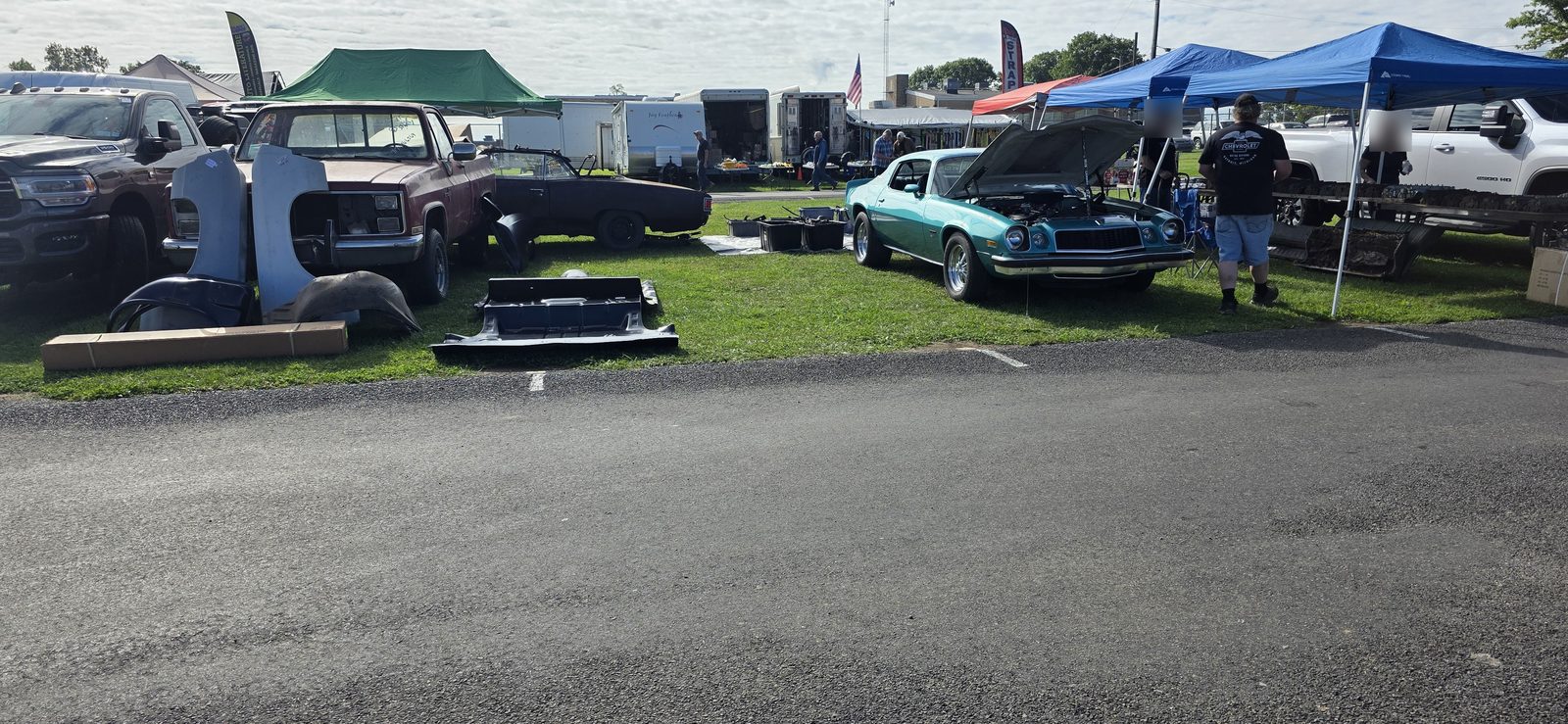
That’s one row. Repro fenders and inner fenders standing up in front of a squarebody, a stamped panel laid flat next to them, a black convertible project behind, a teal second-gen Camaro with the hood up one spot over. Under the blue tents, racks of used parts. None of it is staged. It’s inventory.
That’s the variety I mean. In one aisle you can pass new repro sheet metal, a whole project car, a pile of used drivetrain parts, and somebody’s box of old literature, and none of it has anything to do with the stall next door. A car show has a theme. A swap meet has whatever people dragged out of their garage that week.
A 1985 GMC, sold as a roller
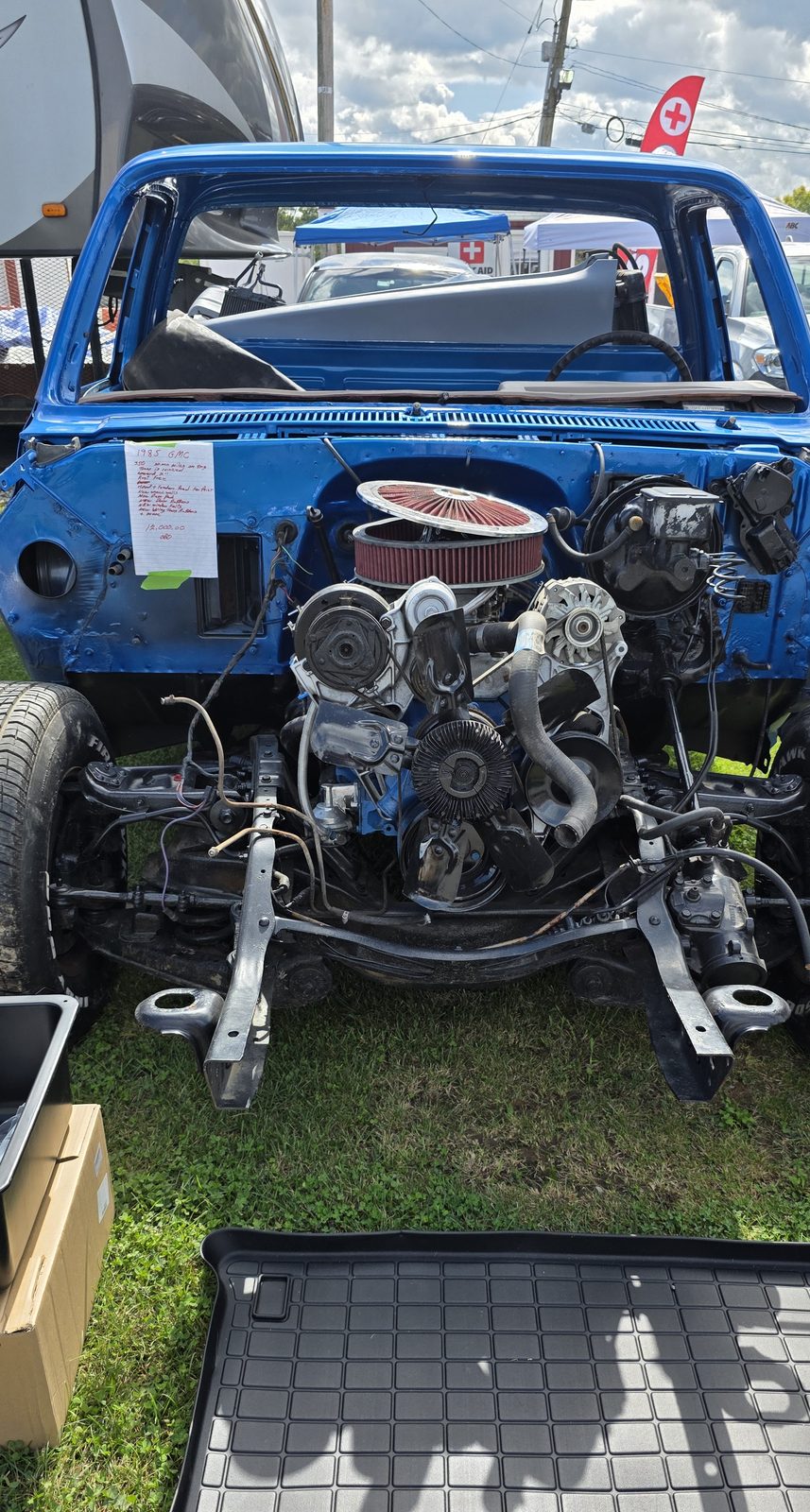
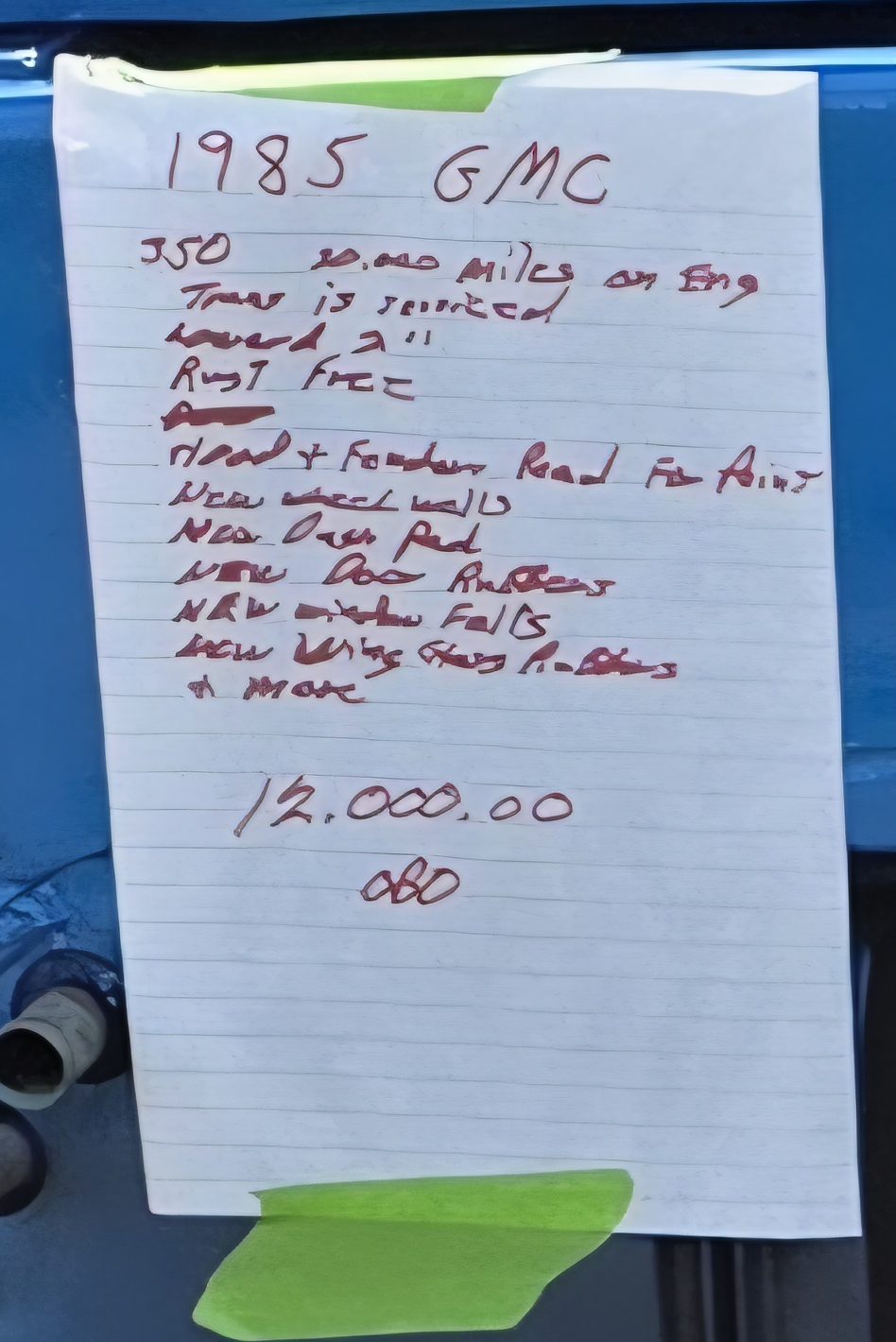
This blue truck stopped me. It’s a 1985 GMC with the front clip stripped off, small-block and front suspension right out in the open. The sheet taped to the cowl says, as best I can read the handwriting:
1985 GMC. 350, 20,000 miles on eng. Trans is serviced. Lowered 2”. Rust free. Hood + fenders ready for paint. New wheel wells, new dash pad, new door rubbers, new window felts, new wing glass rubbers & more. $12,000.00 OBO.
The mileage is the hardest part to make out. It looks like 20,000 to me, but I wouldn’t swear to it.
It’s overpriced in my opinion. Most cars at a show like this are. That’s not a shot at the seller. A swap meet asking price is an opening number, and “OBO” on the sheet tells you that.
What I’d read into a sheet like this as a restorer:
- “Hood + fenders ready for paint” means the front end comes with it but isn’t on the truck. Panel fit, gaps, and paint are still your job.
- “Rust free” is a claim. Check it yourself with a flashlight on the cab corners, floors, and rockers.
- “Lowered 2"" means the suspension isn’t stock. That matters later if you’re shopping stock parts.
- New rubber and felts are nice to have, but they’re smaller line items next to the bodywork and paint still ahead.
For me the value at Carlisle is in the parts and sheet metal aisles, not the cars. That’s where you can put a tape measure on a fender before you pay for it.
How I walk a swap meet
These aren’t rules. They’re habits that keep me from driving home with the wrong fender.
Numbers first. Part numbers, casting numbers, and real measurements off your car, written down or in your phone. “I think it’s a ‘78” is how you end up with the wrong inner fender. If you use the printable intake, bring it.
Sheet metal gets checked in person. This is the big advantage over ordering online. Look at the flanges and the bends. If you brought a piece of the original or a gauge reading, compare thickness. Check where the mounting holes sit and whether the body lines look crisp or soft. Repro quality is all over the place, and a fender that looks fine in a listing photo can be a fight at the door gap. The OEM vs NOS vs repro guide has the longer version of how I weigh that.
Cash. Some vendors take cards. Don’t count on it. Cash also makes the price conversation shorter.
A cart. You’ll walk a lot, and you don’t want to leave a fender at a stall and hope it’s still there when you come back with the truck. A folding wagon or hand cart fixes that.
Look at everything before you buy anything. First lap is for looking. The same panel can turn up three rows over from a different vendor, maybe a different maker, maybe a better price. Note what you saw and where, then buy on the second lap. The exception is the oddball NOS piece you’ve been hunting for years. That one won’t wait for your second lap.
The same skepticism I use on online parts listings applies here. The difference is the part is in your hands, so use that.
Squarebodies everywhere
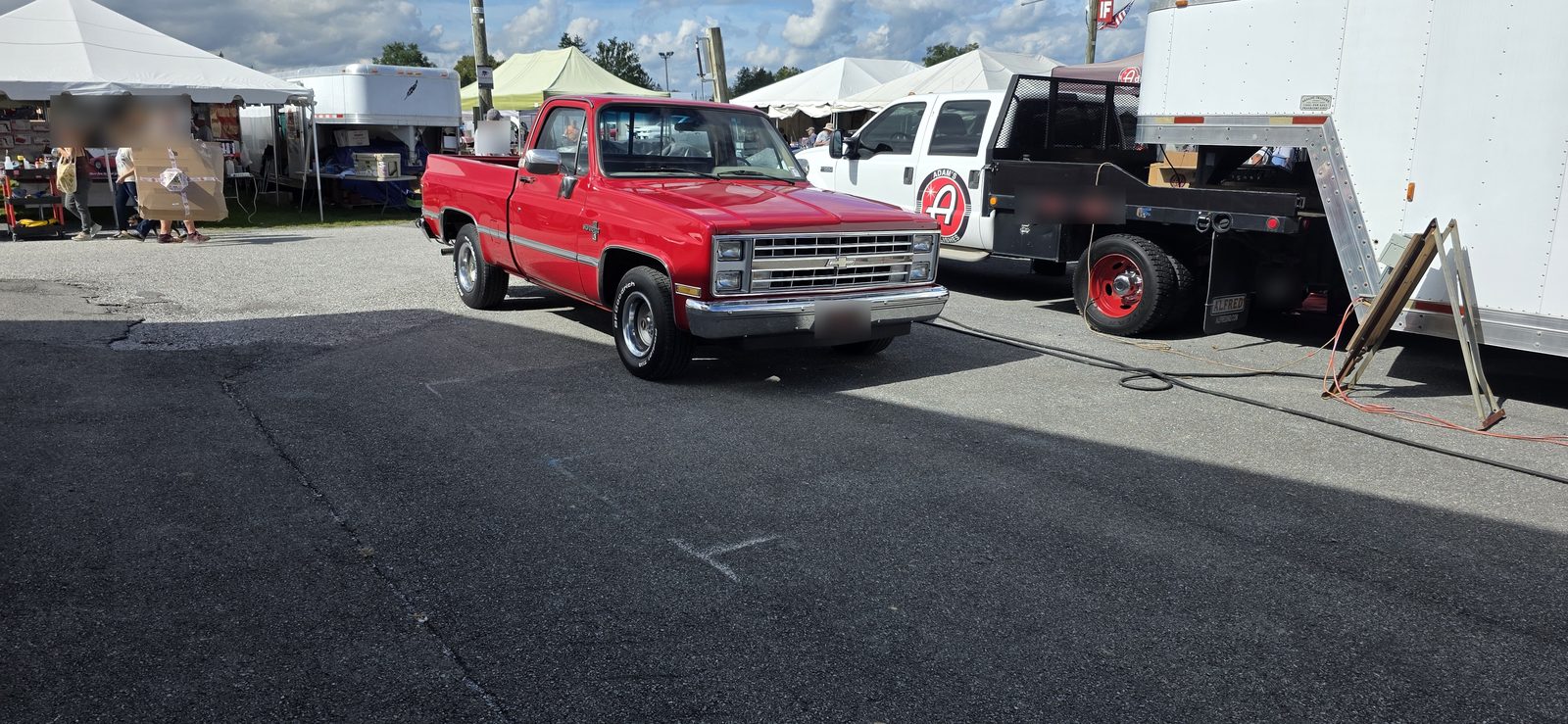
If you’re into ‘73 to ‘87 GM trucks, Fall Carlisle is a good place to be. Most of the photos I took have a squarebody in them, and I wasn’t trying. The red short bed above was clean. The GMC was the same generation at the other end of the project. That spread is the point. Finished trucks, half-done trucks, and the parts to get from one to the other, all on the same fairgrounds.
Carlisle pitches Wednesday as the day with more room to shop and get the lay of the land before the rest of the week. If you can only make one day and you want room to look, that’s the one they point you to.
Bottom line
A car show is for looking at finished cars. A swap meet like Fall Carlisle is for finding the parts that get yours finished. That’s what this site is about anyway: parts that actually fit the car in your garage.
If there’s a meet this size within driving distance, go. Bring your measurements, bring a cart, and walk the whole field before you spend. I don’t know how many more years we’ll have events like this, so I’m not skipping them.