Frame brackets after an engine swap
Engine swap brackets are sold by year and engine. Your frame may not match either. Measure the frame stands, holes, and crossmember you have before you order.
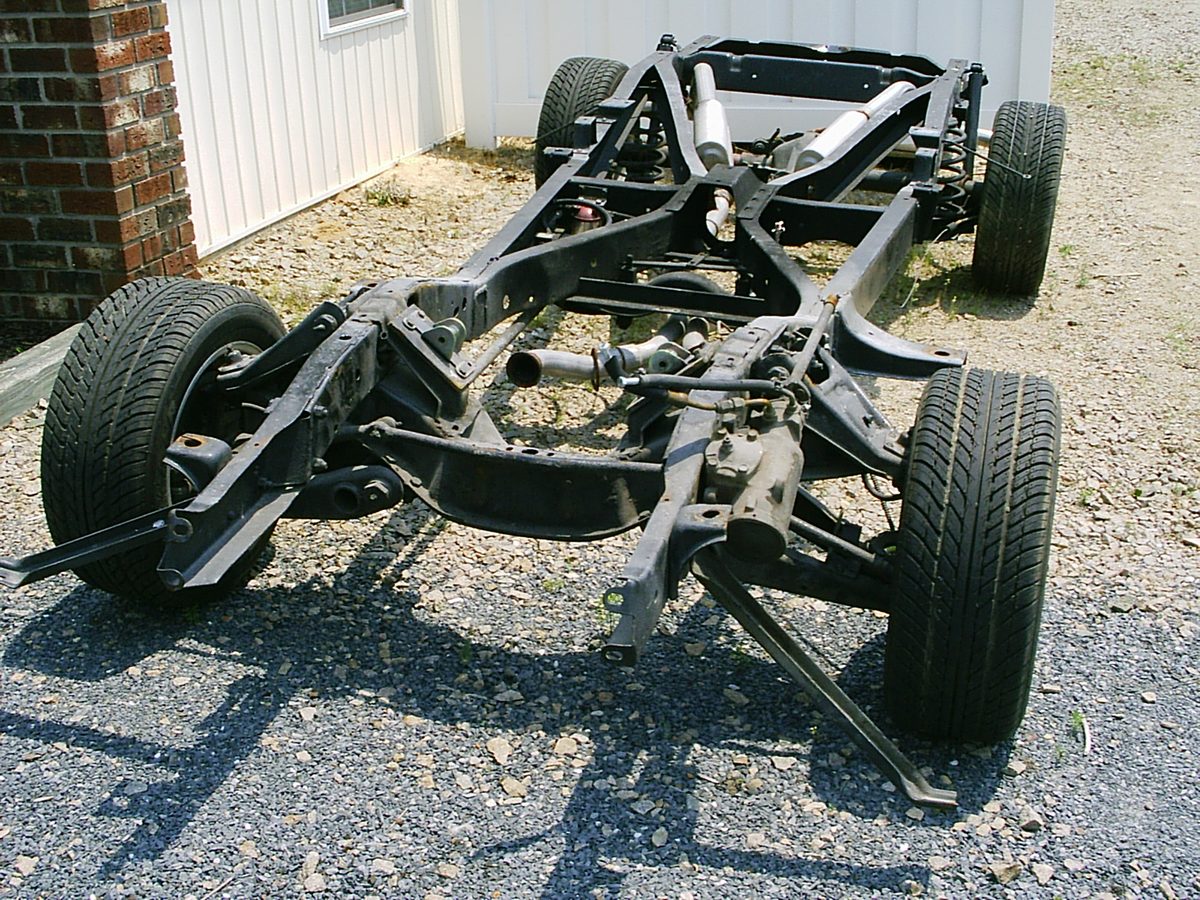
The engine is the easy part to buy. The brackets that hold it to the frame are where the returns start.
Swap brackets get sold by truck year and engine family. That’s two facts about a catalog. Neither one is a fact about your frame rails.
The frame already changed before you got it
A truck that left with a six and now runs a V8 doesn’t use the same motor mounts, frame stands, or trans crossmember. I said that in the classic truck traps post and it holds double after a swap, because somebody before you may have done one already.
On some trucks the six and the V8 didn’t even mount the same way. Speedway Motors’ squarebody swap guide says V6 frame mounts don’t work with LS motor mount adapters, and that the frame stands may need replacing depending on what engine the truck came with (Speedway Motors). So “73-87 C10” isn’t enough to order from. You need to know what’s bolted to the rails right now.
The catalog can be wrong too
This isn’t just a listing problem on small sites. Summit Racing’s OnAllCylinders blog ran a mount test on a Nova and found the Moroso catalog listing for 1969 and later big block Novas appeared to be wrong. The catalog mount was about 2.66 inches wide on the inside, more than a quarter inch too wide for the frame mount bracket. The mount that actually fit measured 2.390 inches (OnAllCylinders).
That’s a car, not a truck. The lesson carries. A tape measure caught what the book didn’t.
The same article says if you don’t match frame mount brackets, motor mounts, and trans crossmember as a set, you get header clearance trouble, clutch linkage trouble, and possible oil pan and steering clearance problems. That’s the whole post in one sentence. The brackets aren’t separate parts. They decide where the engine sits.
What I measure before I order brackets
Before money moves, on the frame I have:
- Frame stands. What’s there now, which side is which, and whether they’re factory or something a previous owner welded or bolted in. Photograph both sides.
- Bolt holes in the rails and engine crossmember. Count them. Look for holes that don’t match anything, and filled holes nearby. That’s a sign of an earlier swap or an earlier wrong order.
- Bracket width. The inside width where the mount sits. That’s the number the OnAllCylinders test turned on.
- Rivets vs bolts. Note where the crossmember is riveted and where somebody switched to bolts.
- Trans crossmember position. Where it is now, and how much room there is to move it. A different engine position usually means a different crossmember spot.
- Frame identity. Wheelbase, hub center to hub center, and any frame numbers. Frames get swapped too.
If I can’t answer the first three on paper, I’m not ready to buy brackets.
Engine position moves everything behind it
Speedway’s guide says LS swap mounts come in forward and rearward positions, because LS mounts sit near the middle of the block, and the transmission you pick usually decides which one you want (Speedway Motors).
Move the engine and you move the trans. Move the trans and the crossmember moves, and the driveshaft length changes. That’s why I don’t order mounts and figure out the crossmember later.
Matched kits exist for a reason
Some brackets are built as a system. Hooker’s Blackheart LS/LT swap brackets for 1967-72 C10s are listed as designed to work with a specific trans crossmember for the same trucks and Hooker’s own headers, to get clearances and U-joint angles right. That crossmember listing names a T56 transmission.
That’s useful, and it’s still a catalog claim. It assumes a stock frame with stock mounting points. If your frame has a previous owner’s stands or extra holes, the kit doesn’t know that. Mock it up before anything gets welded or torqued.
Hooker’s Mopar B-body Hemi swap brackets make the same point from the other side. The listing says they fit the K-member on cars that came from the factory with a V8 (listing). Factory six car? Read that line twice.
Don’t mix mount types to make it fit
If the brackets are close and you’re tempted to throw one solid mount in to fix it, don’t. Summit Racing tech advisor Carl Pritts told OnAllCylinders Summit doesn’t recommend mixing motor mounts, and that one flexible mount with the rest solid can break parts like a bellhousing. Summit recommends solid mounts for race use only (OnAllCylinders).
Get the brackets right instead.
When I’d buy
I wait to buy parts until the real work starts. Brackets are a good example of why. Until the old engine is out and the frame is clean enough to measure, I don’t know what I’m buying for.
So the order goes like this. Engine out. Frame cleaned and photographed. Stands, holes, and crossmember measured. Engine and trans picked together. Then brackets.
The Classic Truck Fitment guide covers more year-split traps, and the Truck Bay series has the rest of the truck posts.
Bottom line
The catalog knows the year and the engine. It doesn’t know your frame. Measure the stands, the holes, and the crossmember you actually have, then buy brackets that fit that.
Write the numbers on the printable intake before you order.
Keep reading
- Classic truck cab swaps and bed strips
- C10 disc brake conversion: fitment first
- C10 bed swap: cab trim and bed checklist
- Print the listing literacy checklist before the next order.